The Body Doesn't Lie: Southeast Asian Mime Artists Are Using Silence to Say Everything the Microphone Won't
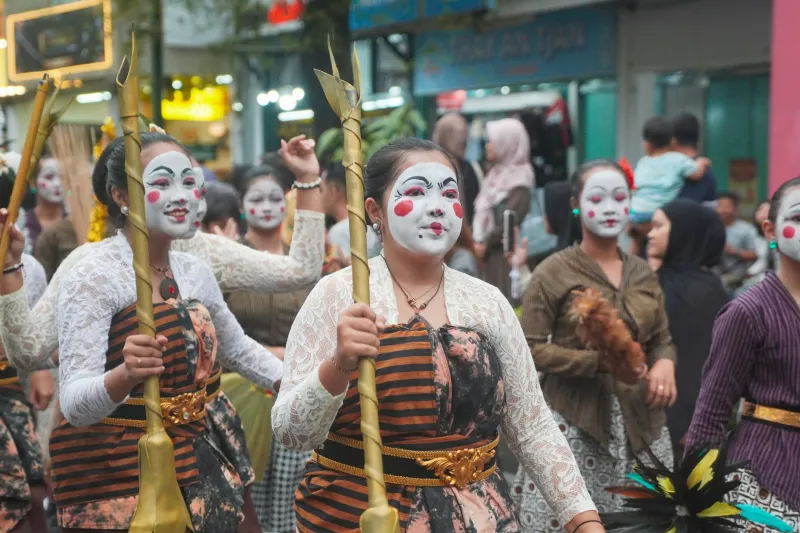
There's a particular kind of dismissal that performers who work without words know intimately. It arrives dressed as a compliment—oh, that's charming, or what a fun crowd-warmer—and it does its damage quietly, which is ironic, given the source. For Southeast Asian mime and physical comedy artists, that condescension has a longer history than most American audiences realize. And a growing wave of contemporary performers is done absorbing it.
They're not just doing mime. They're doing something far more precise, far more loaded, and far more political than the white-faced Parisian caricature that word probably conjured in your head just now.
Bodabil Wasn't a Joke—It Was a Survival Strategy
Start in the Philippines, because the Philippines tends to get overlooked when people map out the global history of physical performance, and that oversight is doing a lot of work for somebody.
Bodabil—a corruption of vaudeville, which tells you something right away about how it arrived—flourished in the Philippines from the early twentieth century through the postwar decades. It was variety entertainment: singers, comedians, acrobats, and yes, physical comics whose entire toolkit was the body. But here's what the sanitized cultural history leaves out: bodabil emerged and thrived under American colonial administration. The performers who made audiences laugh without speaking were navigating a censorship environment, a language hierarchy, and a colonial gaze that privileged English-language expression above everything else.
Silence, in that context, wasn't a limitation. It was a workaround. A loophole. A way to say things that would have gotten you in trouble if you'd said them out loud in the wrong language to the wrong crowd.
Contemporary Filipino physical comedians and mime artists who draw on this lineage aren't being nostalgic. They're being strategic. When Manila-based performer Lara Dizon—who has been building a following both at home and in Southeast Asian festival circuits—strips away the dialogue and lets the body do the entire argument, she's working within a tradition that was always about more than entertainment. It was about who gets to control the terms of expression.
Thai Street Performance and the Intelligence of the Improvised Gesture
Move northeast and the conversation shifts register but not urgency. Thai street performance has its own physical comedy vocabulary, one that intersects with classical khon dance-drama traditions, with regional folk theater, and with the irreverent, improvisational energy of Bangkok's public spaces. The performers who work these corners and markets have developed a kinetic language that's hyper-local and instantly legible to the communities they perform for—and almost entirely opaque to outside observers who haven't done the work of paying attention.
That opacity is often mistaken for simplicity. It is not simple.
What looks like a gag to a tourist is frequently a layered commentary on class, on bureaucratic absurdity, on the gap between official culture and lived reality. The physical comedian who plays the bumbling authority figure in a market square performance is doing something that Brecht would recognize immediately—breaking the fourth wall, implicating the audience, making the familiar strange. He's just doing it without the benefit of a European theoretical framework to make the academy take it seriously.
That's the double bind these artists navigate. The work is sophisticated. The language that would grant it institutional legitimacy has historically belonged to someone else.
What the West Thinks Mime Is (And Why That's a Problem)
Let's be direct about the Marcel Marceau problem. American and European audiences have a very specific mental image when they hear the word mime, and it involves a beret, a striped shirt, an invisible box, and a vaguely tragic affect. That image—which is itself a reduction of a much richer French pantomime tradition—has become the default lens through which Western critics evaluate any physical performance that doesn't use text.
Apply that lens to Southeast Asian physical comedy and you will misread almost everything. The aesthetic values are different. The relationship between performer and audience is different. The role of improvisation, of community call-and-response, of humor as a vehicle for grief or resistance—all of it operates by different rules. And when Western presenters, festival curators, or critics encounter these performances without doing the contextual homework, they tend to slot them into whichever box is closest: folk art, street entertainment, charming ethnic performance.
Each of those categorizations is a way of not taking the work seriously. Artists across the region are increasingly vocal about refusing them.
Stillness as a Political Act
One of the most striking things about watching skilled mime and physical performance from this part of the world is how much gets communicated through restraint. Not through the exaggerated, broadly telegraphed gestures that Western audiences associate with the form, but through micro-adjustments—a held breath, a weight shift, a gaze that lands somewhere just past the audience's comfort zone.
Indonesian performer and theater maker Rizki Pratama, who has been developing a practice that blends topeng mask traditions with contemporary physical theater, talks about stillness as the sharpest tool in the kit. "When I stop moving," he's said in interviews, "that's when the audience has to do the work. I'm not giving them the answer. I'm making them sit with the question."
That's not a technique borrowed from Western mime tradition. It's a practice rooted in the contemplative aesthetics of Javanese performance, where restraint carries more weight than display, where the space between gestures is as meaningful as the gestures themselves. It's also, incidentally, a more demanding ask of an audience than most contemporary performance makes.
In a media landscape engineered to eliminate stillness—to fill every second with stimulation, to make the pause feel like a malfunction—these artists are doing something genuinely countercultural. They're insisting that the audience slow down, pay attention, and meet the work on its own terms.
Building the Infrastructure for Seriousness
The practical challenge facing Southeast Asian mime and physical comedy artists isn't just about changing how critics think. It's about building the institutional infrastructure that makes sustained practice possible—training programs, festival platforms, critical writing, and international networks that don't require artists to translate themselves into Western frameworks to gain access.
That infrastructure is being built, piece by piece. Regional theater festivals in Singapore, the Philippines, and Thailand are increasingly programming physical performance alongside text-based work without treating it as the novelty slot. Young artists are finding each other across borders, sharing techniques, co-creating work that draws on multiple national traditions simultaneously. And the internet—which has done complicated things to live performance in general—has at least created pathways for these artists to reach audiences in the US and Europe who might never have encountered their work otherwise.
The American audience that discovers this work through a festival program or a social media clip is encountering something that has been refined over generations, that carries specific cultural weight, and that is asking specific questions about power, expression, and whose body gets to speak. Whether they bring enough context to hear all of that is a separate question.
But the work is asking it regardless. Loudly. In silence.