Rot Is a Radical Act: Southeast Asian Fermenters Are Reclaiming the Microbe as a Political Tool
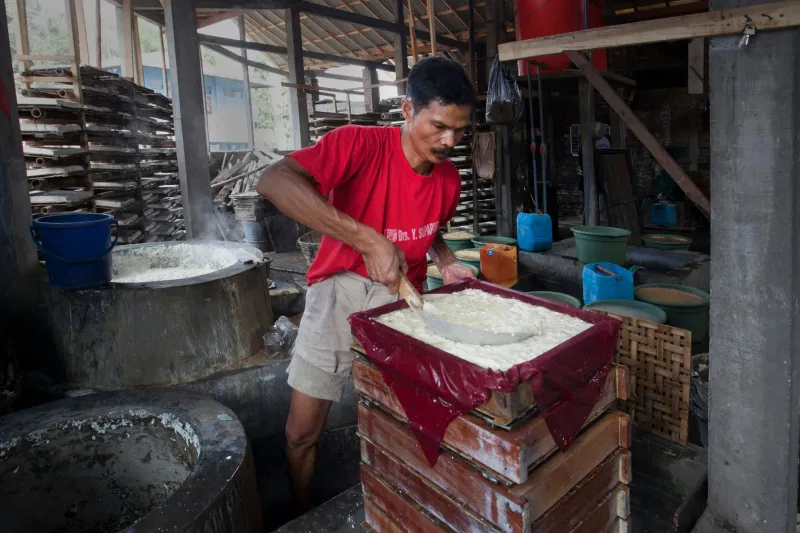
There's a jar sitting on a shelf in a Brooklyn apartment that smells like the inside of a grandmother's kitchen in Yogyakarta. It's full of soybeans wrapped in white mycelium — tempeh in progress — and its owner, Dian Kusuma, checks on it the way some people check their phones. Obsessively. Hopefully. With a little bit of reverence.
"People ask me why I don't just buy tempeh at Whole Foods," she says, laughing. "I tell them: because that's not the point. The point is to remember who taught this to us, and why we almost forgot."
Dian is part of a loose but growing network of Southeast Asian fermenters, food preservationists, and culinary activists scattered across the US who are treating ancient microbial techniques as something much bigger than a food trend. For them, fermentation is memory. It's resistance. It's a direct rebuke to the industrial food machine — and to the colonial logic that told their ancestors their food was primitive in the first place.
The Politics of Letting Things Sit
Fermentation is one of the oldest food technologies on the planet, and Southeast Asia has one of the richest fermentation cultures anywhere. Think beyond tempeh: there's prahok, the Cambodian fermented fish paste that's been called the "cheese of Cambodia." There's belacan, Malaysia's shrimp paste cornerstone. Vietnam's nước mắm — fish sauce — is an entire economy and emotional inheritance compressed into amber liquid. Indonesia alone has dozens of regional fermented products, from tape (fermented cassava) to dadih (fermented buffalo milk from West Sumatra) to oncom, tempeh's funkier, less-famous cousin.
For centuries, these weren't artisanal novelties. They were survival technology. Ways to preserve protein across monsoon seasons, to stretch a harvest, to build flavor from scarcity. The knowledge lived in households, passed hand to hand, mostly through women.
Then colonialism happened. Then industrialization. Then the global processed food system decided that anything fermented and pungent was a liability rather than an asset. And a lot of that knowledge got quietly buried.
"There's a generation gap that's real," says Thanh Nguyen, a Vietnamese American food educator based in the Bay Area who runs workshops on traditional fermentation. "My parents' generation came here as refugees. Survival meant assimilation. You didn't want to be the kid whose lunch smelled. So things got lost."
Thanh's workshops aren't just cooking classes. They're intergenerational recovery projects. Participants make nước mắm from scratch — a process that takes months — and in doing so, they're forced to slow down, to sit with uncertainty, to trust biology in a way that our instant-gratification culture actively discourages.
Against the Algorithm of Efficiency
There's something almost punk about fermentation's timeline. You can't rush it. You can't optimize it with an app. The microbes don't care about your schedule. In a food culture dominated by Amazon Fresh deliveries and two-minute noodles, choosing to wait six months for your fish sauce to be ready is a genuinely countercultural act.
And that's precisely what draws a lot of these practitioners to the work.
Rio Hartono, an Indonesian American artist and tempeh maker based in Los Angeles, frames his practice explicitly in terms of resistance to industrial food systems. He sells small-batch tempeh at farmers markets and runs a zine — very much in the spirit of Southeast Asian DIY culture — that documents both the fermentation process and its political context.
"Industrial soy is destroying ecosystems," he says. "A lot of it is grown on land that was cleared from Indonesian and Brazilian rainforests. And then it gets turned into fake meat that gets marketed as sustainable. Meanwhile, tempeh — which is literally just whole soybeans and a fungus — gets treated like an exotic ingredient."
Rio's zine connects tempeh production to a broader critique of who gets to define "sustainable food." It's not subtle, but it's not supposed to be. "If a white dude in Portland makes sourdough, it's artisanal. If my mom makes tempeh in her kitchen, it's a health code violation. That asymmetry is the whole story."
Microbes as Ancestors
What makes this fermentation revival distinct from, say, the general American obsession with kimchi and kombucha is the explicitly cultural and spiritual framing these practitioners bring to the work.
For many of them, fermentation isn't just about food — it's about relationship. With land, with ancestors, with microbial communities that have been cultivated across generations.
Sri Wahyuni, a Javanese American herbalist and food preservationist in Chicago, describes her tempeh starter culture — a ragi she brought from her aunt in Solo — as a living inheritance. "This culture has been kept alive in my family for decades," she says. "When I feed it, I'm maintaining a relationship. That's not metaphorical. That's literally what's happening."
Sri runs a small community fermentation space out of a shared kitchen on the North Side, where she teaches classes that blend practical instruction with cultural history. She's deliberate about centering Southeast Asian knowledge systems rather than framing traditional fermentation through a Western wellness lens.
"I get frustrated when fermentation gets marketed as a gut health trend," she says. "Not because gut health isn't real, but because it strips the practice of everything that makes it meaningful. It turns a community technology into a consumer product."
DIY Culture Meets Decolonial Practice
What's interesting about this movement is how naturally it connects to other currents in Southeast Asian creative culture — the same DIY ethos that drives the zine scene, the indie music underground, the craft revivals happening in weaving and ceramics and metalwork. There's a shared sensibility: reclaim the means of production, reject the gatekeepers, build your own infrastructure.
Dian, the tempeh maker in Brooklyn, puts it simply: "The knife cuts both ways, right? You can use traditional knowledge to sell out to a wellness brand, or you can use it to build something that actually belongs to your community."
She's currently working with a collective of Indonesian diaspora artists on a project that pairs fermentation workshops with storytelling sessions — connecting the specific chemistry of tempeh production to larger narratives about Indonesian food sovereignty, about the soy industry, about what gets called "superfood" and why.
It's the kind of work that doesn't fit neatly into any existing category. It's culinary art. It's activism. It's cultural preservation. It's community organizing. And it smells, at least for a few days, absolutely incredible.
The Long Game
Fermentation has always been about playing the long game. You set something in motion, you tend to it, and then you wait. The outcome depends on conditions you can influence but never fully control.
There's a lesson in that for anyone thinking about cultural survival. You can't microwave your way back to something that was nearly lost. You have to be willing to sit with the mess, the uncertainty, the smell.
But if you do — if you're patient, if you show up every day to check on the jar — what you get back is alive in a way that nothing off a factory line ever could be.
"My tempeh starter is older than I am," Dian says. "That's wild to me. I'm just the current caretaker."
She checks the jar one more time. The mycelium is coming in white and dense. Right on schedule. Right on time.