Bottled Memory: The Southeast Asian Perfumers Turning Cultural History Into Scent
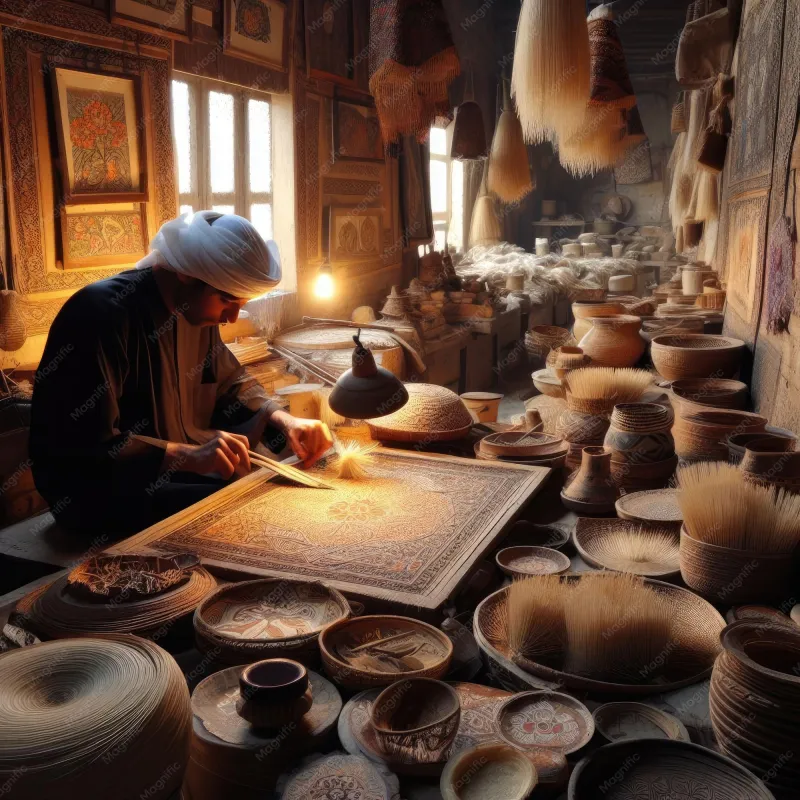
Photo: artisan perfume making Southeast Asian spices botanicals small batch fragrance bottles, via img.freepik.com
Close your eyes and imagine the smell of a Balinese temple at dusk. Frangipani offerings wilting in the heat. Sandalwood incense threading through humid air. The faint sweetness of palm sugar being reduced somewhere nearby. Now imagine that smell in a small amber bottle, with a handwritten label, sold directly to someone in Portland or Brooklyn who has never set foot in Bali — but who, after reading the story behind it, desperately wants to.
That's the business model that a growing number of Southeast Asian independent perfumers are quietly building. And it's more disruptive to the fragrance industry than it might initially sound.
The Problem With Mainstream Perfume
The global fragrance market is enormous — valued at well over $50 billion and dominated by a handful of European luxury conglomerates who've spent decades telling a very particular story about what fine perfume is supposed to smell like, where it's supposed to come from, and who it's supposed to be for.
Spoiler: that story has rarely included Southeast Asia, despite the fact that the region has been supplying the world's perfume industry with raw ingredients — oud, patchouli, ylang-ylang, benzoin, vetiver — for centuries. The materials come from here. The credit, the branding, and the profit margins largely haven't.
Independent perfumers from the region are starting to flip that equation.
Spice Routes in a Bottle
Ayu Dewantari runs Rempah Wangi ("Fragrant Spice") out of Surabaya, Indonesia's second-largest city and a place with deep historical roots in the spice trade. Her line of small-batch fragrances is built around specific Indonesian cultural narratives — a scent called Pasar Pagi ("Morning Market") that opens with raw clove and green mango before drying down to a base of smoky coconut wood; another called Pelabuhan ("Harbor") that tries to capture the particular atmosphere of an old East Java port.
"I grew up around my grandmother's spice cabinet," Ayu explains. "Those smells were completely ordinary to me as a child. Then I started learning about Western perfumery and realized that the same ingredients I'd been surrounded by my whole life were being sold in Paris as 'exotic' and 'mysterious' — as if they had no origin, no story, no people attached to them."
Rempah Wangi launched with a small Instagram following and a modest Etsy presence. Within eighteen months, Ayu was fielding wholesale inquiries from boutique retailers in California and New York. She's kept the operation deliberately small — maximum 200 bottles per batch — partly for quality control and partly because scarcity is built into the brand's DNA.
"When you make something small, you can tell the truth about it," she says. "I can say exactly which market I sourced the cloves from. I can tell you the name of the farmer. That's not something Chanel can do."
Cambodia's Temple Smoke
In Phnom Penh, perfumer Sothea Noun is working with an even more specific cultural archive. Her project, Khmer Olfact, focuses on recreating the olfactory landscape of Khmer cultural and spiritual practice — the incense burned at Wat Phnom, the floral offerings at household shrines, the particular smell of rain on ancient sandstone.
It's a project with real emotional weight. Cambodia's cultural heritage was catastrophically disrupted during the Khmer Rouge era, and the act of preserving and transmitting sensory memory carries a significance that goes well beyond niche luxury marketing.
"Smell is the sense most directly connected to memory," Sothea says. "When I make a scent that references a specific Khmer ritual, I'm doing something that a photograph or a text can't fully do. I'm giving people a way to feel something that might otherwise be lost."
Khmer Olfact sells primarily through a direct-to-consumer model, with detailed written narratives accompanying each fragrance. The notes aren't just listed — they're explained, contextualized, given a story. A fragrance called Prasat ("Temple") comes with a three-paragraph description of the specific temple that inspired it, the time of day, the ceremony being performed. Western buyers, Sothea has found, respond strongly to this level of specificity.
"People in the US are tired of being sold a vague idea of luxury," she observes. "They want to know what they're actually buying. Where it comes from. Who made it. Why."
The Economics of Slow Fragrance
Small-batch artisanal perfumery is not a path to fast money. The economics are genuinely challenging — raw materials are expensive, especially when you're sourcing ethically and locally rather than going through commodity brokers. Regulatory compliance for exporting cosmetic products internationally adds another layer of complexity. And building a brand from scratch, without the distribution infrastructure that big houses take for granted, requires sustained creative and logistical effort.
But the margins, for those who break through, can be surprisingly strong. A 30ml bottle of Rempah Wangi retails for $85 to $120 — pricing that positions it firmly in the niche perfumery segment that has been one of the fragrance industry's fastest-growing categories for the past decade. At those price points, a run of 200 bottles represents meaningful revenue for a solo operation with low overhead.
More importantly, the direct-to-consumer model means these makers are capturing a relationship with their buyers that would be impossible through traditional retail channels. Email lists, Substack newsletters, detailed product storytelling — these perfumers are building audiences, not just customers.
Scent as Cultural Export
What's happening in Southeast Asian independent perfumery is part of a larger pattern that Pisau has been tracking across creative industries — the systematic dismantling of the idea that Southeast Asian culture is raw material waiting to be refined and repackaged by someone else.
The same logic that drives a Javanese batik maker to sell directly to American consumers, bypassing the middlemen who've historically captured most of the value, applies here. The same instinct that leads a Filipino zine collective to self-publish and self-distribute rather than wait for institutional validation is at work in these perfumers' direct-to-consumer strategies.
Cultural knowledge has always been Southeast Asia's most undervalued export. What's changing is that the people who hold that knowledge are increasingly building the infrastructure to monetize it themselves — on their own terms, at their own pace, with their own stories attached.
The fragrance industry's next disruption might not come from a biotech lab or a Silicon Valley startup. It might come from a small studio in Surabaya that smells like cloves and morning markets.
And honestly? That sounds about right.