No Permission Required: The Southeast Asian Queer Filmmakers Writing Their Own Screen Stories
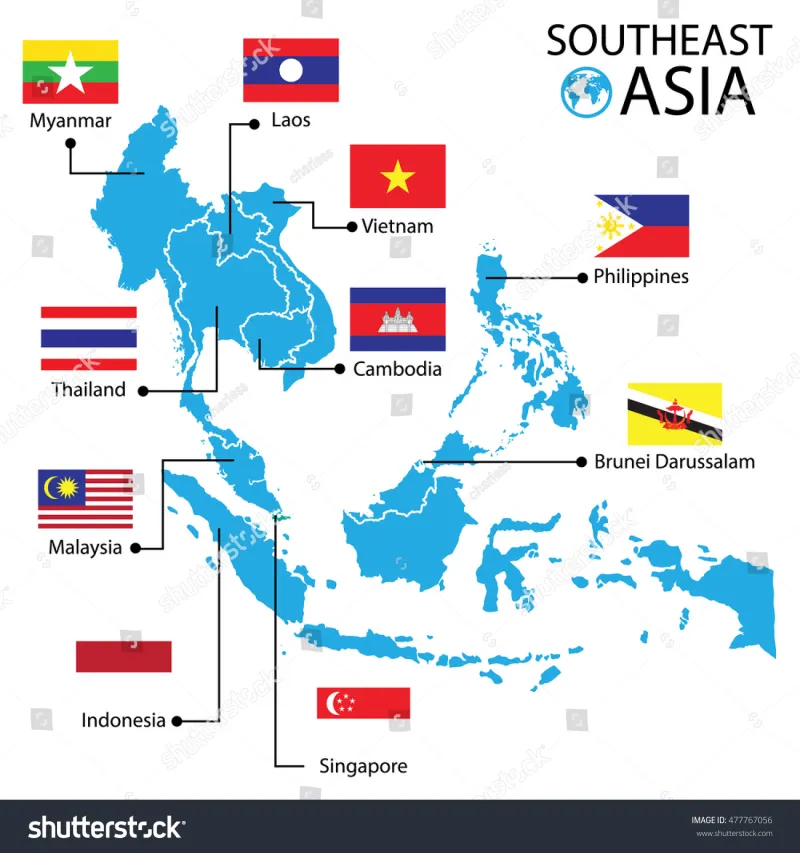
Photo: Southeast Asian independent film festival cinema screening audience diverse, via image.shutterstock.com
Here's a scene you won't find in most mainstream conversations about queer cinema: a 26-year-old director from Yogyakarta, Indonesia, editing her debut short film on a laptop balanced on a kitchen table, knowing that the film she's making could get her banned from local broadcast platforms, celebrated at a Berlin film festival, and copied by a streaming algorithm in the same month. She's not making this film for any of those outcomes in particular. She's making it because the story has never been told in a language she recognizes as her own.
This is where Southeast Asian queer cinema lives right now — in that electric, precarious space between visibility and vulnerability.
Beyond the Western Gaze
Let's name something that often goes unsaid in American coverage of global queer film: a lot of it is still filtered through a Western curatorial lens that decides what counts as "brave" or "groundbreaking" based on how closely it mirrors Euro-American coming-out narratives. The festival circuit, for all its genuine value, has historically rewarded stories that translate cleanly into Western frameworks of LGBTQ+ identity — the repressed protagonist, the dramatic revelation, the urban escape.
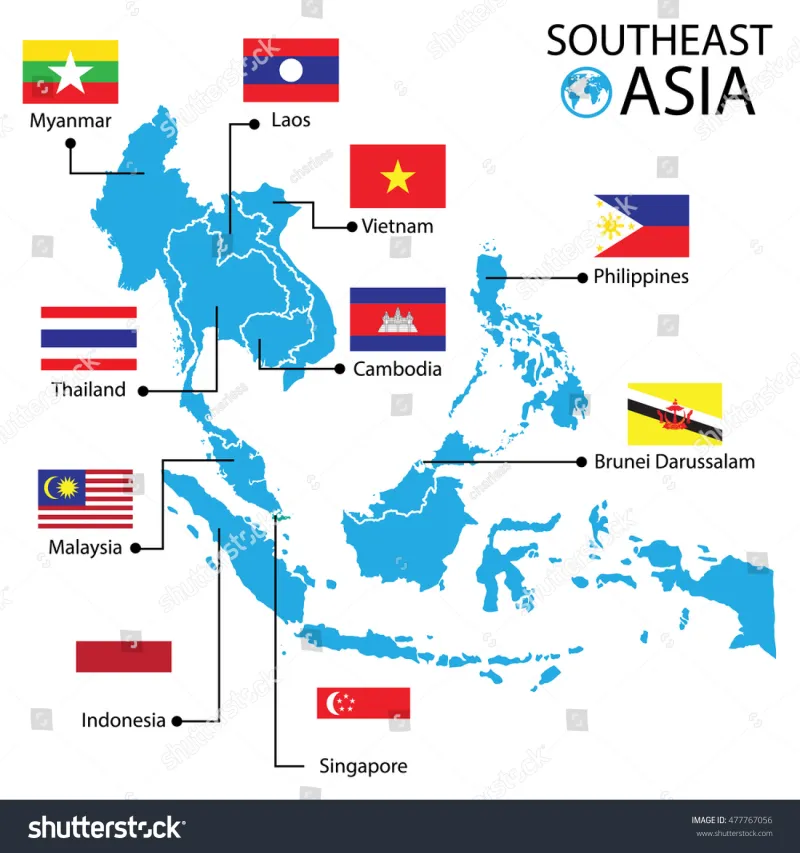
The filmmakers emerging from Indonesia, Thailand, the Philippines, Vietnam, and Myanmar are increasingly uninterested in that template. Their work is messier, more culturally specific, and in many ways more honest about what queer life actually looks like in societies where identity doesn't always organize itself around Western categories.
Thai director Nattawut Poonpiriya, whose commercial work has reached international audiences, has spoken openly about the gap between how queerness is performed for global consumption versus how it's actually lived in Bangkok's social fabric. Independent filmmakers in his wake are digging into that gap with a lot more room to be uncomfortable.
The Censorship Math
Making queer content in Southeast Asia involves a kind of constant calculation that American independent filmmakers rarely have to perform. In Indonesia, the world's largest Muslim-majority country, there's no explicit law banning LGBTQ+ content — but there are broadcasting regulations, social pressure, religious organization influence, and a political climate that has grown increasingly hostile since roughly 2016. Filmmakers navigate this not by self-censoring into invisibility, but by developing a sophisticated visual and narrative vocabulary that communicates clearly to queer audiences while remaining technically ambiguous enough to move through certain gatekeeping systems.
In Malaysia, the Film Censorship Board has a documented history of cutting or banning content depicting same-sex relationships. Filipino filmmakers operate in a more permissive environment, though the country's deeply Catholic social conservatism creates its own set of pressures. The result, across the region, is a body of work that has learned to say enormous things in the spaces between what's explicitly shown.
That constraint, paradoxically, has produced some extraordinary cinema. When you can't show everything, you learn to use light, sound, and framing in ways that carry more weight than explicit depiction. Several critics have noted that the best Southeast Asian queer short films circulating on the festival circuit right now have a visual intelligence that puts a lot of well-funded Western queer content to shame.
Festival as Platform, Not Destination
For these filmmakers, the international festival circuit — Sundance, Berlinale, Frameline in San Francisco — serves a specific strategic function. It's not primarily about Western validation. It's about creating a documented record of legitimacy that can be leveraged back home, a kind of protective visibility. A film that has screened at a major international festival is harder to suppress quietly.
But the more interesting development is what's happening at the regional level. Festivals like the QCinema International Film Festival in the Philippines and the Thai Short Film and Video Festival have become genuine launchpads, building audiences that are specifically Southeast Asian and specifically engaged with queer work from within their own cultural context. These aren't niche events clinging to the margins — QCinema in particular has grown into a significant cultural moment in Manila, drawing mainstream attention alongside its core queer programming.
Digital distribution has opened another lane entirely. Short films that might never reach a theatrical audience are finding tens of thousands of viewers through YouTube, Vimeo, and regional streaming platforms. Indonesian short film platforms like Kineria have hosted queer content that would struggle to clear broadcast standards. The audience is there. It always was.
Profiles in Controlled Chaos
Without naming names that could create unwanted attention for filmmakers still working in sensitive environments, it's worth sketching a few of the creative approaches circulating right now.
One Filipino director working in the Visayas region has been making a series of short documentary-fiction hybrids about bakla identity — a Filipino gender category that doesn't map neatly onto Western gay or trans frameworks — that has built a devoted following among Filipino diaspora communities in the US. The work is explicitly about refusing the translation, about insisting that bakla be understood on its own terms rather than as a local synonym for something already named elsewhere.
A collective of young Indonesian women filmmakers in Bandung has been producing work that centers lesbian and bisexual experience in a social context that almost never acknowledges it exists. Their films circulate primarily through private screenings and WhatsApp group links — a distribution model that sounds precarious but has built a community of viewers who are intensely engaged precisely because finding the work requires intention.
In Thailand, where queer representation in mainstream media has a longer (if complicated) history through the country's robust Boys' Love industry, a counter-movement of filmmakers is deliberately working against that genre's conventions, making queer films that aren't designed to be palatable to straight audiences as fantasy content.
What US Audiences Are Missing
If you're in America and your exposure to Southeast Asian queer cinema is limited to whatever surfaces on Netflix's algorithm, you're seeing a fraction of a fraction. The most vital work is moving through festival circuits, private screenings, diaspora community networks, and social media in ways that don't generate the kind of data points streaming platforms use to surface content.
Seeking it out requires a bit of effort — following regional film festivals on social media, checking in with diaspora cultural organizations, and being willing to watch something without English subtitles sometimes. That effort, though, connects you to a creative conversation that's genuinely urgent and genuinely unfiltered.
These filmmakers aren't making work for your approval. They're making it because their lives exist and deserve to be on screen. That's a different energy than a lot of what gets called brave in mainstream cinema — and it shows.