Skin Deep, Roots Deeper: The Tattoo Artists Stitching Pre-Colonial Identity Back Into Living Flesh
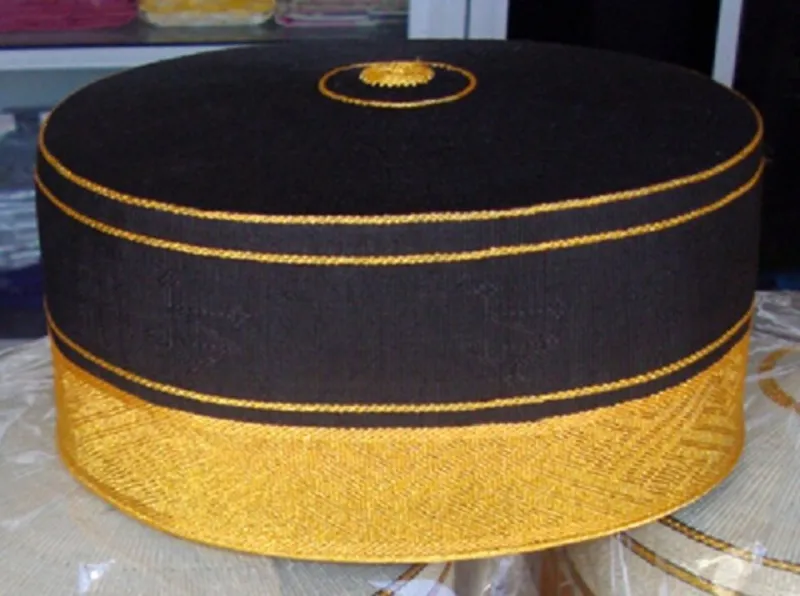
Photo: Unknown authorUnknown author, CC BY-SA 4.0, via Wikimedia Commons
There's a photograph sitting in a Dutch colonial archive — taken somewhere in Sulawesi, sometime in the early 1900s — of an Indigenous woman whose arms are covered in geometric tattoos. The photographer was almost certainly not interested in what those marks meant to her. He was cataloguing, classifying, filing her body away as evidence of "primitive" culture. Over a century later, a tattoo artist in Makassar named Rini Sulastri is staring at that same photograph on her laptop screen, sketching out the patterns by hand, and preparing to return them — transformed, living — to the skin of a young woman whose grandmother was from the same region.
This is the work. And it's happening all over Southeast Asia right now.
The Archive as Raw Material
For most of the 20th century, indigenous tattooing traditions across Southeast Asia were either actively suppressed by colonial administrations, pushed underground by religious conversion campaigns, or simply allowed to die out as communities were forced to modernize on someone else's terms. What survived often ended up in European museums, academic papers, and missionary journals — documented without consent, stripped of context, and effectively locked away from the people who created those traditions in the first place.
That's the inheritance a new wave of tattoo artists is working with. And they're not treating it gently.
In the Philippines, practitioners of batok — the ancient hand-tapped tattooing tradition of the Kalinga people — have been pushing hard against the commodification of their craft by Western tattoo tourists. Artists like those working alongside legendary mambabatok Whang-Od in the Cordillera highlands have become increasingly vocal about who gets tattooed, what symbols are appropriate for outsiders, and why the price of a tattoo should reflect its cultural weight, not just its Instagram appeal. The conversation has gotten loud enough that it's now influencing how younger Filipino tattoo artists in Manila and Cebu approach their own research into pre-colonial body art traditions from other regions of the archipelago.
"We have hundreds of ethnic groups in the Philippines," one Manila-based artist explained in a recent online talk. "Most of them had their own tattoo languages. We've barely scratched the surface of what's been lost — or what can be found again."
Pricing as Politics
One of the most quietly radical things happening in this movement is the deliberate pricing structure many of these artists have adopted. Western tattoo culture — especially the prestige end of it — has built an economy where a heavily researched, culturally specific piece can easily run into the thousands of dollars. That price point isn't neutral. It effectively exports Indigenous aesthetics to wealthy Western collectors while pricing out the communities those aesthetics came from.
Several artists working in this space are explicitly rejecting that model. Rini in Makassar runs a tiered system: local clients from communities connected to the symbols she works with pay significantly less than clients from outside the region. She's not the only one. A tattoo collective in Yogyakarta has built a community pricing model where a portion of every international commission subsidizes work for local clients who couldn't otherwise afford it.
This isn't charity. It's a deliberate reorientation of who the work is for.
"The symbols belong to the people first," Rini said. "I'm not a gatekeeper. But I do think about who I'm serving when I pick up the needle."
Vietnam and Thailand: Different Histories, Same Urgency
In Vietnam, the tattooing traditions of highland ethnic minorities like the Mnong and Ede peoples were largely erased through a combination of colonial-era stigma and post-reunification assimilation pressure. Researchers and artists are now working — sometimes together, sometimes in tension — to reconstruct what those traditions looked like and what they meant.
The challenge in Vietnam is partly linguistic: a lot of the documentation that exists is in French, written by administrators who were more interested in control than culture. Young Vietnamese tattoo artists are learning French specifically to access those archives. There's something almost poetic about using the colonizer's language to dismantle the colonizer's framing.
Thailand's relationship with traditional tattooing is different and more complex. Sak yant — sacred geometric tattoos applied by Buddhist monks and spiritual practitioners — never fully disappeared, but it has been aggressively commercialized by the tourism industry. The spectacle of a foreign backpacker getting a sak yant tattoo at a tiger temple has become its own kind of cultural shorthand for a certain type of extractive travel. Thai artists working to restore the spiritual and community dimensions of the practice are doing so in direct opposition to that image, insisting on the protocols, the relationships, and the meanings that the Instagram version erases entirely.
What "Reclaiming" Actually Looks Like
It's worth being honest about the complexity here. "Reclaiming" isn't a clean process. Communities have changed. Descendants of the people who wore these symbols may have complicated or ambivalent relationships with them. Some symbols were tied to social hierarchies or spiritual practices that no longer exist in the same form. The artists doing this work aren't naive about any of that.
What they are is careful. The best practitioners in this movement are spending years in archival research, building relationships with community elders, consulting with anthropologists and historians, and — crucially — listening to the people they're tattooing about what these symbols mean to them now, not just what they meant 200 years ago.
That's a fundamentally different approach than the Western tattoo industry's typical relationship to "tribal" aesthetics, which has historically meant: see something that looks cool, copy the visual, ignore the meaning, charge a premium.
The International Following Problem (and Opportunity)
Here's the tension that nobody fully resolves: several of the artists doing the most rigorous cultural reclamation work are also building significant international followings. Their Instagram accounts are full of Western admirers. Some of those admirers want tattoos. Some of those admirers are willing to fly to Yogyakarta or Manila or Chiang Mai to get them.
Is that a problem? The artists themselves are divided. Some see international attention as a resource that funds the community-centered work. Others worry about replicating the same extractive dynamics they're trying to dismantle, just with themselves in a different position.
There's no consensus answer. But the fact that these artists are asking the question — loudly, publicly, in their captions and their interviews and their community workshops — is itself a kind of answer. They're not sleepwalking into commodification. They're watching for it.
The Needle as Research Tool
What's most striking about this movement, from the outside, is how it collapses the distance between scholarship and practice. These artists aren't waiting for academics to hand them a finished history. They're doing the archival work themselves, making interpretive choices themselves, and then testing those choices in the most direct way possible: by putting the results permanently into human skin.
That's a level of commitment to your research that most historians will never match.
The colonial archive thought it was preserving these symbols as curiosities. It didn't count on the people those symbols belonged to coming back for them — needle in hand.