Photocopied and Proud: Southeast Asia's Zine Scene Is Thriving Precisely Because It Refuses to Scale
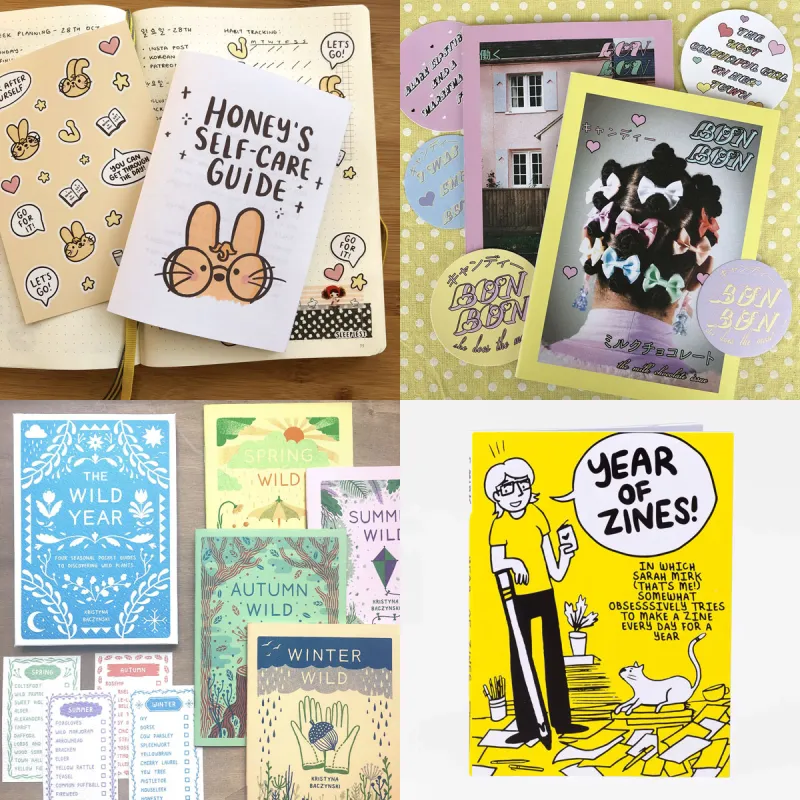
Photo: zine making collage cut and paste indie publishing Southeast Asia youth, via www.supercutekawaii.com
There's a particular smell that zine makers talk about with something close to reverence. That sharp, slightly chemical hit of a fresh photocopy. The faint warmth of a risograph print. The tacky grip of rubber cement on cut-up magazine pages. It's not a glamorous smell. It's not meant to be.
In an era when Southeast Asian youth culture is increasingly mediated through algorithm-optimized short videos and aesthetic-forward Instagram grids, a growing number of artists across Indonesia, the Philippines, Thailand, and Vietnam are deliberately reaching for the staple gun instead of the ring light. They're making zines — the scrappy, self-published, unapologetically lo-fi booklets that have fueled underground creative movements since the punk explosion of the 1970s. And they're building something that no TikTok trend cycle can replicate.
Cut Paper, Sharp Politics
In Yogyakarta, the collective Lembar Lepas (loosely translated: "loose pages") has been publishing irregular zines since 2019, covering everything from queer identity in Indonesian cities to the environmental cost of the country's palm oil industry. Co-founder Dina Rahayu describes the decision to go print as almost instinctive.
"We tried making content for social media first," she says. "But everything we made felt like it was being flattened. The algorithm wants you to get to the point in three seconds. We wanted to take up space differently."
Lembar Lepas prints in runs of 150 to 300 copies, distributes through a network of independent bookstores, art spaces, and occasionally the trunks of friends' motorcycles. Their zines are hand-collaged, sometimes bilingual, and deliberately resistant to the clean visual language of brand-friendly content. A recent issue on housing displacement in Yogyakarta featured hand-drawn maps, photocopied government documents, and first-person testimonials laid out in deliberately chaotic typography. It sold out in two weeks.
"We're not anti-internet," Dina clarifies. "We announce on Instagram. We have a newsletter. But the zine itself is the thing that can't be screenshotted and stripped of context."
Manila's Copy Shop Renaissance
Head to the Cubao Expo complex in Quezon City on the right weekend and you might stumble into a zine fair that feels like a fever dream — part underground record swap, part community organizing meeting, part art school critique. The Philippines has one of the most active zine cultures in the region, and a lot of that energy is rooted in Manila's long history of using print as protest.
Tala Zine Collective is one of the groups driving the current resurgence. Founded by a loose group of illustrators, poets, and graphic designers, Tala operates without a fixed membership or formal structure — a deliberate choice, says contributor Marco Villanueva, that mirrors the medium itself.
"Zines were always anti-institution," he explains. "The whole point is that you don't need permission. You don't need a publisher, an editor, a budget. You need an idea and access to a photocopier."
Tala's recent issues have tackled mental health stigma, the legacy of Marcos-era censorship, and the experience of Filipino diaspora communities — themes that resonate far beyond the archipelago. They've shipped copies to readers in California, New York, and London, often through nothing more sophisticated than a PayPal link in a bio.
This is the paradox that makes Southeast Asia's zine scene so fascinating: it's deeply, almost aggressively local in its concerns, yet it's building international audiences precisely because it refuses to sand down its edges for broader appeal.
Thailand's Risograph Uprising
In Bangkok, the zine revival has taken on a distinctly visual character, driven partly by the growing accessibility of risograph printing — a Japanese stencil-printing process beloved by indie publishers for its grainy, slightly imprecise color overlaps and its relatively low cost per run.
At Zap Zine, a small collective operating out of a shared studio in the Ari neighborhood, risograph is both a medium and a statement. Founder Ploy Srisawat started the project after years working in commercial graphic design, where she felt increasingly disconnected from the work she was producing.
"In commercial work, everything is optimized. The colors are exact, the layouts are tested, everything is designed to convert," she says. "Risograph is the opposite. The ink bleeds a little. The registration is slightly off. There's always something unexpected. I find that more honest."
Zap Zine's output ranges from personal essay collections to visual documentation of Bangkok's rapidly disappearing street food culture. Their work has been featured in international zine fairs in Portland and Berlin, a fact that Ploy finds both gratifying and slightly amusing.
"Western audiences sometimes romanticize the lo-fi aesthetic like it's a retro trend," she says, laughing. "For us it's not nostalgia. It's a choice we're making right now, in response to right now."
Vietnam's Quiet Print Revolution
In Ho Chi Minh City, zine culture operates in a somewhat different context — one shaped by tighter restrictions on independent media. Which makes the scene's vitality all the more striking.
Collectives like Giấy Nhám ("Sandpaper") navigate this landscape carefully, focusing on cultural and personal themes rather than overtly political content, while still finding ways to push at boundaries. Their zines explore Vietnamese youth identity, gender expression, and the collision between rapid urbanization and traditional community life.
Distribution is largely word-of-mouth, supplemented by carefully managed social media presence. Issues are sometimes left in coffee shops, bookstores, and universities — a deliberate echoing of the samizdat traditions of underground publishing in other parts of the world.
Why Lo-Fi Is a Power Move
Across all these contexts, something consistent emerges: the choice to make zines isn't a rejection of skill or ambition. These are often highly trained designers, illustrators, and writers who could produce slick digital content if they wanted to. The roughness is intentional.
It's the same logic that drives the batik makers building direct routes to American consumers, or the gamelan musicians who are streaming ancient sounds without waiting for a Western label's blessing. The tool changes, but the underlying move is the same: cut out the gatekeepers, own the means of production, speak directly to the people who actually care.
Zines can't be demonetized. They can't be shadow-banned. They can't have their reach throttled by a platform update. Once they're printed and in someone's hands, they exist completely outside any system that didn't invite them in.
That's not nostalgia. That's strategy.
And in Southeast Asia right now, it's working.