The Village Is the Syllabus: What Southeast Asian Community Art Schools Teach US Institutions About Place
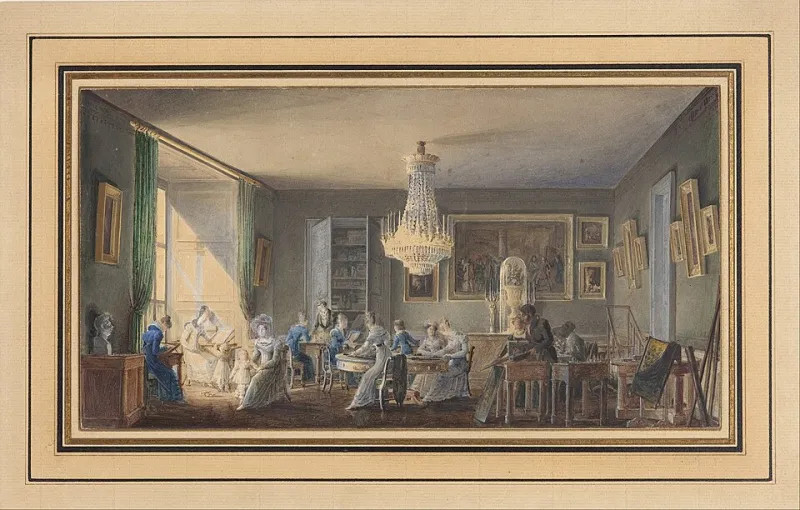
Photo: Unknown authorUnknown author, Public domain, via Wikimedia Commons
American art schools love the white cube. They love it so much they build more of them: thesis exhibitions, residency studios, MFA critiques that treat a blank wall as neutral ground. But the white cube is not neutral. It is a specific export, with its own assumptions about what art is for, who it serves, and which audiences count. In Southeast Asia, a growing number of alternative art schools are asking a different question. What if the village is the syllabus?
That is not a metaphor. Across Indonesia, the Philippines, Thailand, Cambodia, and Malaysia, collective studios, apprenticeship programs, and community-rooted curricula are treating local context as the course catalog. They start with the neighborhood, the watershed, the market, the temple, the rice cycle. They measure success by usefulness to a place, not proximity to a market. US art schools could learn something—if they can get over the fantasy that the only serious art education happens in a building with a loading dock.
The white cube was never neutral
The critique is familiar, but it bears repeating. The white cube separates art from life and then sells the separation as freedom. It rewards work that can be moved, priced, and explained in a press release. It treats community engagement as a bonus, not a foundation. And it buries students in debt while telling them that the market will sort it out.
Southeast Asian community art schools are not immune to those pressures. Many operate on tiny budgets. Some face censorship, state surveillance, or the constant threat of gentrification. They are not utopias. But many of them begin from a premise that US institutions struggle to articulate: art education is a form of local infrastructure. It should make a place more livable, more legible, more capable of holding its own stories.
What a sanggar does differently
In Indonesia, the sanggar is a community studio where people gather to learn dance, music, theater, and craft. It is not a school in the Western sense. There are no credit hours, no tenure track, no thesis defense. There are teachers, elders, peers, and a schedule built around festivals and harvests. A student might learn to carve a wayang puppet because a performance needs one, not because a syllabus requires a unit on wood.
That does not make the learning less rigorous. It makes it more accountable. The work has to function in a specific context. A mask has to fit a dancer. A song has to carry a procession. A textile has to survive a wedding and a funeral. The standard is not “is this innovative?” It is “does this hold?”
Apprenticeship is not a downgrade
US art schools often treat apprenticeship as a lesser path, something for trades or crafts, not for serious artists. Southeast Asian models flip that hierarchy. Apprenticeship is how knowledge moves: through repetition, observation, correction, and trust. It is slower than a semester. It is also more durable.
A community-rooted curriculum does not reject critique. It relocates it. Instead of a weekly group critique in a seminar room, feedback happens in the studio, at the market, during a performance, in conversation with people who will live with the outcome. That kind of critique can be harder to take. It is also harder to fake.
A different scorecard
If US art schools wanted to learn from these models, they would need a different scorecard. Not just exhibitions and placements, but usefulness: Did the project strengthen a local network? Did it share skills? Did it leave infrastructure behind? Did it pay people? Did it avoid extracting stories from a community and selling them uptown?
Some US programs already do this work—community colleges, land-grant extension programs, cooperative studios, and place-based residencies. But they are often treated as peripheral to the prestigious MFA pipeline. Southeast Asian community art schools suggest that the periphery might be the point.
What US schools could steal—with permission
The lesson is not to copy a sanggar or romanticize scarcity. It is to ask what a school would look like if it started with the neighborhood instead of the gallery. It might mean partnerships with local libraries, labor unions, and cultural centers. It might mean hiring artists whose practice is rooted in place, not just in the market. It might mean letting students build something that stays.
The white cube will survive. It has good lighting. But it is not the only room where art happens. Southeast Asian community art schools are proof that another syllabus is possible—one where the village is not a field trip. It is the classroom.