Off-Key and On Record: The Karaoke Bars That Keep Southeast Asian Languages Singing
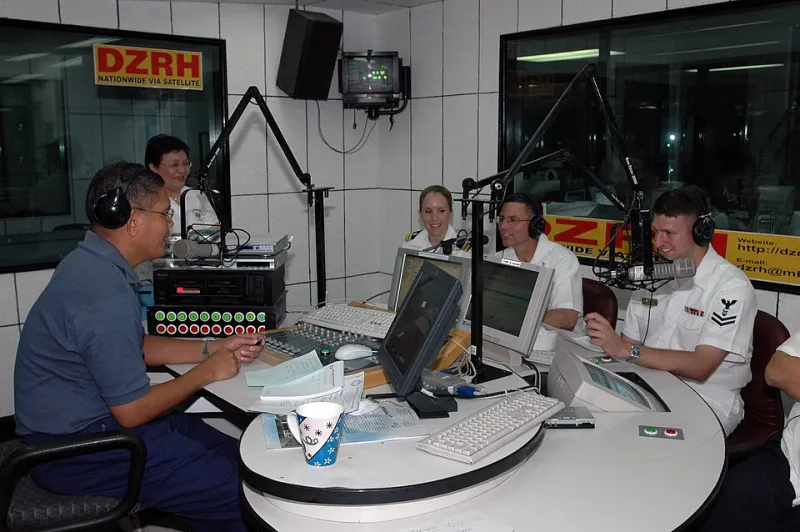
Photo: United Nations Office on Drugs and Crime, CC BY 2.0, via Wikimedia Commons
At a strip-mall karaoke bar outside Houston, the most important archive in the room is not the cloud. It is a three-ring binder held together with packing tape. The pages are laminated, annotated, and indexed by language: Vietnamese first, then English, then a handful of songs in Lao that regulars request by pointing. A grandmother in a fleece jacket queues up a lullaby she learned in the Mekong Delta. Her granddaughter, born in Texas, sings the harmony a beat late. Nobody claps for perfection. They clap because the song made it here.
That scene is not a novelty night. It is preservation work, performed off-key.
The songbook is a family tree
Southeast Asian karaoke bars across the United States run on homemade catalogs. These are not the polished menus of corporate karaoke chains. They are family trees with page numbers. A song might appear in three versions: the original, a remix that only one uncle can sing, and a phonetic transliteration for cousins who never learned the script. The binders collect dedications, coffee rings, and corrections in ballpoint pen. One page in a Hmong community spot in Minnesota lists a song title next to the note: “for weddings, not funerals.” That is metadata. That is curation.
The catalog matters because the languages do. Vietnamese, Khmer, Lao, Hmong, Tagalog, Indonesian, Burmese, and Thai communities have spent decades building lives in the US while watching fluency slip between generations. Streaming platforms promise infinite choice, but they do not carry the specific recordings that a community actually sings. Those tracks live on laserdiscs, VCDs, DVDs, USB drives, and MIDI files. Some are dubs. Some are covers. Some are the only known recording of a regional song. The karaoke bar becomes the de facto library.
The repair shop as conservator
The machines are aging, and that is the point. A karaoke player from the 1990s is not a retro prop. It is a playback device for a format that never made the jump to Spotify. When a laser pickup fails or a power supply burns out, the bar does not replace the machine with an app. It calls a repair tech who knows how to solder a replacement capacitor and align a tray that has been opened ten thousand times.
In Orange County, San Jose, Houston, and Northern Virginia, small repair shops keep these systems alive. Their work is unglamorous and essential. They are conservators of a vernacular archive, even if they would never use that word. The cloud cannot preserve what it never ingested. The repair shop can.
What the microphone does
Karaoke is often framed as a joke: the drunk uncle, the dramatic ballad, the missed high note. But the joke is a doorway. Inside, something more serious happens. Children learn tonal control by copying their parents. Teenagers practice a language they hear at home but rarely speak at school. Elders perform songs that carry regional accents and vocabulary no textbook teaches. The bar is a classroom with a disco ball.
It is also a place for diaspora humor. Regulars roast each other’s pitch. They argue about which version of a classic is canonical. They invent English translations that are funnier than the original. That humor is not a distraction from preservation. It is how preservation survives. A language kept only in solemn ceremonies becomes a museum piece. A language sung badly, loudly, and repeatedly becomes a living thing.
The algorithm cannot sing this
In 2026, the karaoke industry is more digital than ever, but the catalog is still uneven. Licensing, regional rights, and the sheer obscurity of some tracks mean that the songs communities care about are often missing from mainstream services. Some bars digitize their libraries. Some don’t, because the machine works and the binder is accurate. Both approaches are fragile.
The real preservation strategy is social. It is the regular who brings in a new CD. The aunt who writes down the lyrics for a nephew. The repair tech who keeps a spare machine in the back. The bar owner who refuses to throw out a songbook because a customer might come back for a song their mother used to sing.
If you want to support this archive, you do not need a grant application. Go sing. Request the song nobody else knows. Ask about the binder. Tip the repair shop. The songbook is not a relic. It is a living document, and it needs voices—even the ones that crack on the chorus.