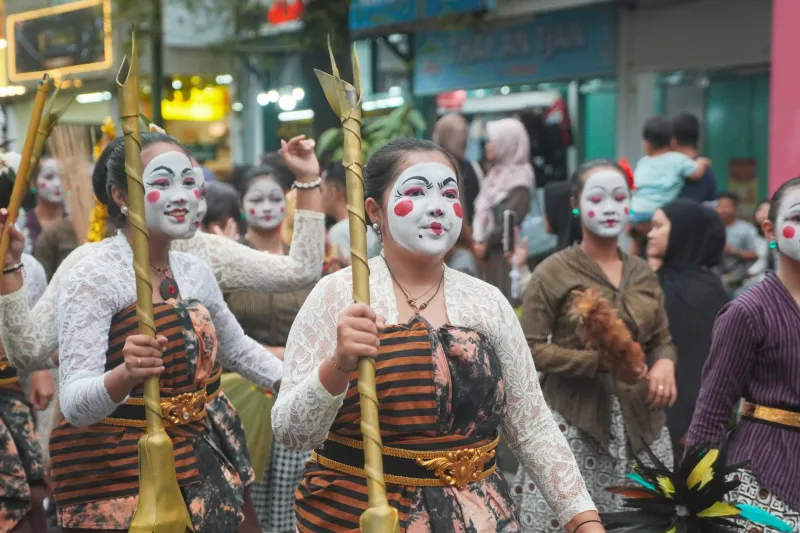
The Dye Bath Is a Document: Southeast Asia's Natural Colorists Are Archiving Plant Knowledge in Cloth
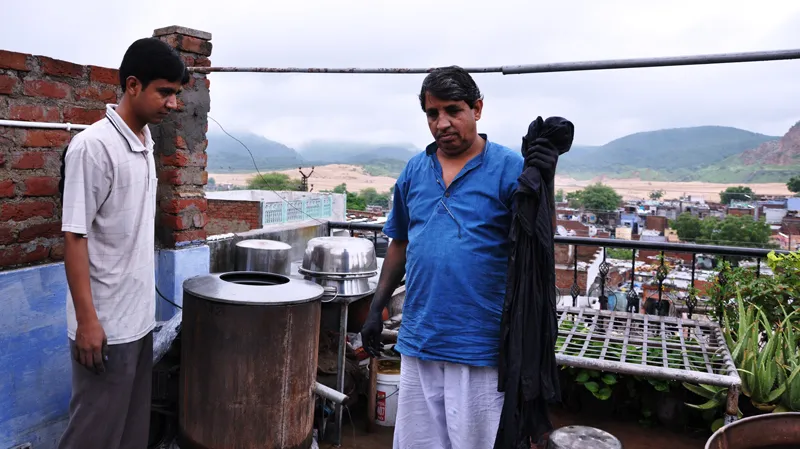
Photo: Anjora Noronha, CC BY-SA 3.0, via Wikimedia Commons
A dye bath is a slow argument with a plant. You add leaves, bark, roots, or insects. You adjust the pH. You wait. You watch the color shift from green to blue, from rust to brown, from something ordinary to something that looks like memory. In Southeast Asia, natural dyers have been having this argument for centuries. Now they are writing it down.
Across Indonesia, Thailand, Vietnam, Laos, Cambodia, the Philippines, and Malaysia, natural dye practitioners are building archives of recipes, plant knowledge, and regional color vocabularies. They are documenting fermentation times, mordant ratios, water sources, and the specific conditions that make a color repeatable. Not because they want to freeze culture in place, but because they know how quickly it can disappear.
The recipe is the record
A natural dye recipe is not just a list of ingredients. It is a record of a place. The indigo might come from a specific variety of tarum. The red might come from mengkudu root, sappanwood, or betel nut, depending on the region and the season. The mordant might be alum, tannin, or mud. The water might be river water, well water, or rainwater. Each choice changes the result.
Dyers are now putting this knowledge into notebooks, spreadsheets, and community workshops. Some are working with botanists to identify plants by scientific name. Some are recording oral histories with elders. Some are teaching younger dyers how to read a dye bath by smell, texture, and color, not just by a timer. The goal is not to standardize the process. It is to make it transferable without flattening it.
Color has a vocabulary
Regional color vocabularies are just as important as the plants. A shade of blue might have a name that refers to a particular indigo harvest. A red might be named for a flower, a clay, or a festival. Those names carry meaning. They tell you where a color comes from and what it is for. When a fast-fashion brand slaps “indigo” on a label, it erases that vocabulary. It turns a relationship into a trend.
This is where natural dye gets political. The work is not just about sustainability. It is about sovereignty. Who gets to name a color? Who gets to profit from it? Who gets to decide what counts as authentic? Southeast Asian dyers are increasingly asking those questions out loud. Some are refusing to work with brands that won’t credit their knowledge or pay for it. Some are building cooperatives. Some are using dye workshops to talk about land rights, water pollution, and seed saving.
The US conversation needs context
In the US, natural dye is having a moment. Sustainable fashion brands talk about plant-based pigments. Crafters trade indigo recipes online. Museums mount exhibitions about color. That attention can be good. It can also be extractive. A dye technique lifted from a community without context becomes another aesthetic. A plant knowledge system reduced to a Pinterest board becomes another commodity.
The antidote is not to stop paying attention. It is to pay attention differently. Ask where the recipe came from. Ask who benefits. Ask whether the dyer is being paid, credited, and consulted. Ask whether the color is being treated as a living practice or a dead trend.
A dye bath can be a manifesto
The most radical thing about natural dye might be its pace. It cannot be rushed. It requires attention, failure, and repetition. It connects cloth to land, water, and labor. In a fashion system built on speed and forgetting, that is a threat. It is also a promise.
Southeast Asian dyers are not preserving the past in amber. They are keeping a practice alive by teaching it, documenting it, and arguing about it. The dye bath is a document. The cloth is the archive. And the color, if you know how to read it, is testimony.