They're Not Your Costume Department: Southeast Asian Designers Are Seizing the Wardrobe Room
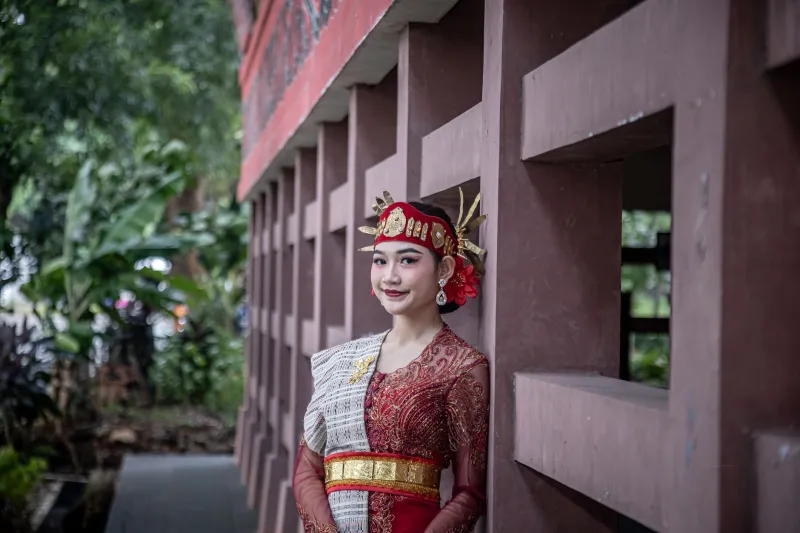
There's a particular kind of exhaustion that comes from watching your grandmother's kebaya turned into a Halloween aesthetic. Ask any Southeast Asian costume designer who's spent time in a major film or theater production, and they'll describe some version of the same scene: a director who's done exactly zero research waving their hand at a mood board of vaguely "exotic" fabrics, asking for something that feels "mystical but approachable." The notes are always breezy. The damage is always specific.
But something's shifting. A generation of Southeast Asian costume designers — working across Hollywood productions, Broadway-adjacent theater, and the rapidly expanding world of prestige streaming — is done being the cultural footnote. They're not interested in consulting. They want the credit line, the creative authority, and the room to say no.
The "Consultant" Trap
For years, the standard move was to bring in a Southeast Asian designer as a cultural consultant — someone to flag the worst offenses while a different, usually Western, head of costume made the actual calls. It looked like inclusion on paper. In practice, it was a liability shield.
"You get brought in to rubber-stamp someone else's vision," says one Jakarta-born designer who's worked on multiple US streaming productions and asked to remain anonymous while still navigating studio relationships. "They want you to say it's authentic, but they've already decided what authentic looks like. If you push back too hard, you're difficult. If you sign off, you're complicit."
The trap is elegant in its cruelty: your cultural knowledge gets extracted, your objections get softened in rewrites, and the finished costume ends up being cited as "culturally verified" because your name was somewhere in a production email chain.
Designers are increasingly refusing that deal. Some are negotiating hard for head-of-department roles upfront or walking away from projects entirely. Others are building their own pipelines — connecting directly with streaming platforms that are actively competing for Southeast Asian content, or working with independent film productions where the budget is smaller but the creative control is real.
Silhouette as Argument
What makes this fight interesting — and genuinely creative — is that the resistance isn't just political. It's deeply technical. The designers leading this push aren't simply demanding sensitivity; they're deploying an encyclopedic knowledge of textile history, construction technique, and regional variation to make arguments that are difficult to dismiss.
Take the question of silhouette. Hollywood's visual shorthand for Southeast Asia has historically defaulted to a narrow set of shapes: sarong-wrapped, heavily embellished, generically "draped." What gets lost is the enormous diversity within the region — the precise tailoring of Filipino Barong Tagalog, the structured geometry of Balinese ceremonial dress, the deliberately restrained elegance of certain Vietnamese court garments. These aren't interchangeable. Treating them as such isn't just lazy; it's a specific kind of erasure.
"When a director says they want something that looks 'Southeast Asian,' I always ask which part, which century, which class, which occasion," says a Filipino-American designer based in Los Angeles who has worked on both film and opera productions. "Because if you can't answer that, you're not asking for authenticity — you're asking for a fantasy you already have in your head."
Her approach is to come to every meeting loaded: historical reference images, textile samples, detailed breakdowns of regional distinctions. It's not just preparation — it's a negotiating strategy. It's much harder to override someone who can tell you exactly why a particular embroidery pattern would never appear on a garment of that status in that period.
The Embellishment Wars
If silhouette is the big fight, embellishment is where the battles get most granular — and most heated. Decorative elements in Southeast Asian dress are rarely purely decorative. Motifs carry meaning. Placement carries meaning. Color combinations carry meaning. And Hollywood, with its instinct to maximize visual spectacle, has a long history of treating all of that as noise.
Multiple designers described versions of the same conflict: a studio pushing for more — more gold, more pattern, more layering — in ways that would have been historically incoherent or culturally inappropriate. The logic is almost always about what reads on camera, what signals "richness" to a Western audience. The logic almost never includes what the embellishment actually communicates within its originating culture.
"They wanted to add songket to a character who, in any accurate historical reading, would never have worn songket," recalls one Malaysian designer, referring to the prestige hand-woven fabric traditionally reserved for Malay royalty and formal ceremony. "It would have been like dressing a servant in ermine. I had to explain that the absence of certain embellishments was itself meaningful — that restraint was the point."
Winning that argument required a detailed written brief, a video call with a textile historian, and three rounds of revision. The designer won. Not every designer does.
Building the Infrastructure
Beyond individual project battles, the longer-term project is structural. A growing network of Southeast Asian designers — connected through social media, diaspora community organizations, and industry guilds — is building something that looks like collective leverage.
That means sharing intelligence: which studios are genuinely open to ceding creative control and which are performing inclusion. It means mentoring younger designers through the specific dynamics of US film and theater production, where the cultural assumptions are different from working in Manila or Kuala Lumpur. And it means being deliberate about documentation — archiving the work, the process, the decisions, so that the knowledge doesn't stay locked inside individual careers.
Some designers are also moving into education, teaching costume history courses that center Southeast Asian traditions rather than treating them as peripheral to a European-dominated syllabus. Others are consulting for museums and cultural institutions, building relationships with audiences who are increasingly curious — and increasingly equipped to notice when something's off.
What Audiences Are Starting to Expect
Here's the shift that might matter most: audiences are catching up. Partly because of social media, partly because of the genuine expansion of Southeast Asian content on streaming platforms, viewers are more likely than they were a decade ago to notice when a costume is doing something specific and intentional — and more likely to notice when it isn't.
That's pressure studios understand. And while it's not the ideal reason for the industry to start taking this seriously — ideally, they'd just do the right thing — it's a pressure that translates into leverage.
The designers working at this intersection know they're not just making clothes. They're making arguments. Every accurately rendered ikat weave is a counter-narrative. Every historically grounded silhouette is a refusal. The scissors aren't just cutting fabric — they're cutting through a century of someone else's imagination.
And they're just getting started.