Breath, Sand, and Fire: Southeast Asia's Glass Artisans Are Making Plastic Look Like the Problem It Is
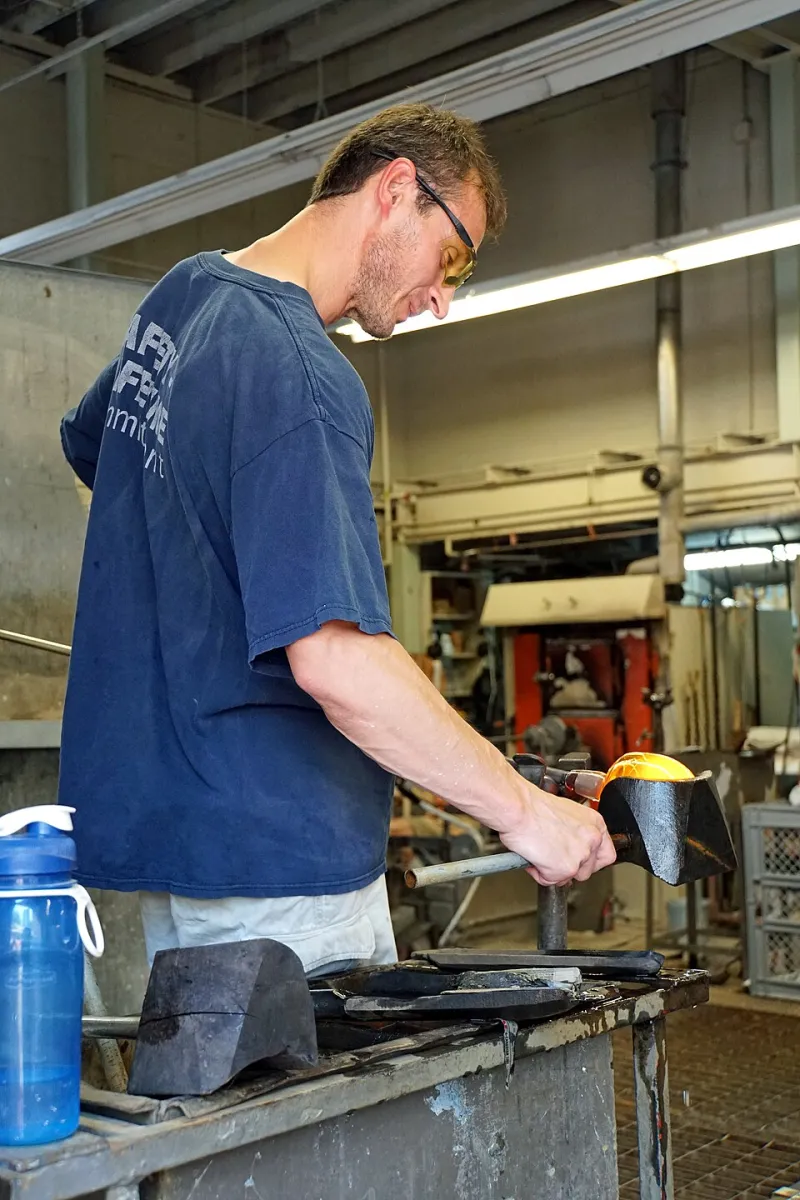
Photo: Dennis G. Jarvis, CC BY-SA 2.0, via Wikimedia Commons
There's a moment — ask any glass-blower and they'll tell you — right before the molten gather hits the pipe, when everything is pure potential. The material hasn't decided what it wants to be yet. That moment feels like a metaphor for something much bigger happening across workshops in Yogyakarta, Hội An, and Chiang Mai right now.
Somewhere between the slow death of single-use plastics and the global hunger for objects that actually mean something, Southeast Asia's glass artisans are stepping into a gap that mass production created and cannot fill. They're not just making beautiful things. They're making an argument.
The Craft That Almost Disappeared
Glass-blowing in Southeast Asia has a complicated origin story. Venetian and Dutch traders brought furnace techniques to the region as early as the 16th century, but local craftspeople didn't simply absorb a foreign skill — they hybridized it. Indonesian artisans in Java layered in local mineral pigments derived from volcanic soil. Vietnamese workshops near Hội An developed a distinctive thin-walled style suited to the region's humid climate. Thai glassmakers in Chiang Mai began incorporating regional floral and mythological motifs that had nothing to do with European aesthetics.
Then colonialism happened. Then industrialization. Then plastic. By the late 20th century, the number of working traditional glass studios across the region had collapsed dramatically. What survived did so mostly in tourist markets, reduced to trinkets.
The artisans reclaiming the craft today are very clear-eyed about that history. They're not nostalgic. They're corrective.
What "Traditional" Actually Means Here
When Balinese-born designer and glass artist Nyoman Arta started his studio outside Ubud six years ago, he was explicit about the framework. "People hear 'traditional' and they think museum piece," he says. "But the tradition I'm working from was already a fusion. It was already adaptive. That's the actual inheritance."
Arta's studio produces pieces that use silica sourced from the volcanic sands of East Java, mixed with mineral colorants that echo the palette of Balinese temple offerings — deep saffron, ceremonial white, the particular green of banana leaf. The shapes, though, are thoroughly contemporary. Carafe forms that work on a Brooklyn dinner table. Pendant lights that could hang in a Highland Park loft. Objects that carry cultural weight without requiring a glossary.
In Vietnam, the Hội An Glass Collective — a loose network of about a dozen artisans centered around the ancient trading port — is doing something similar but with a different emphasis. Their focus is on the thinness of the glass itself, a technique that requires extraordinary breath control and has historically been associated with Vietnamese ritual vessels. Applied to modern drinkware and vases, it creates objects that feel almost impossibly delicate. Which is, as collective member Trần Minh Khoa points out, the entire point. "Plastic is thick and cheap and it lasts forever in the worst way," he says. "We're making something that rewards care. It asks something from you."
The Sustainability Angle That Isn't Just Marketing
Here's where things get interesting for American consumers who've grown understandably skeptical of brands slapping "sustainable" on anything with a muted color palette.
Traditional Southeast Asian glass-blowing, practiced at this scale, is genuinely low-impact in ways that are hard to fake. The studios are small. The raw materials are largely local. The process produces no plastic byproduct. The objects, when they eventually break, return to something the earth already knows how to deal with.
More importantly, the labor model is different. These aren't factories. Several of the Indonesian studios operate on a master-apprentice structure that compensates apprentices as full participants from the beginning — a deliberate pushback against the exploitative production chains that define most of what fills American home goods stores.
Eco-conscious buyers in cities like Portland, Austin, and New York have started finding these makers through platforms like Faire and through direct Instagram discovery, and the response has been notable. Several Chiang Mai-based studios report that US orders now account for a meaningful share of their export revenue — something that would have been unimaginable even five years ago.
Luxury Brands Are Circling, and That's Worth Watching Carefully
Predictably, the larger commercial world has noticed. A handful of well-known home goods and lifestyle brands have approached Southeast Asian glass studios about collaboration or supply partnerships. The artisans' responses have been instructive.
Some have engaged cautiously, negotiating terms that protect their methods and ensure credit. Others have declined entirely, wary of the scaling pressure that inevitably follows when a brand with serious distribution muscle comes knocking. "The moment you're making a thousand units of the same thing, you've already lost the conversation," says one Jakarta-based glass artist who asked to remain unnamed because they're currently in discussions with a major retailer.
That tension — between visibility and integrity, between reach and control — is one that Southeast Asian craft communities know intimately. It's the same tension that's defined every interaction between local makers and global markets going back centuries. The difference now is that the artisans have more tools, more platforms, and more precedent for saying no on their own terms.
The Furnace as Studio, the Studio as Statement
What strikes you, watching any of these workshops in action, is how physical the whole enterprise is. Glass-blowing is labor in the most direct sense — breath and muscle and heat and timing, none of it automatable, none of it replicable by an algorithm. In a cultural moment when so much creative production is being flattened into content, there's something almost radical about an object that required a human body to exist.
That's the argument these artisans are making with every piece they pull from the furnace. Not just that plastic is bad, though it is. Not just that sustainable alternatives are possible, though they are. But that the way we make things encodes values, and that choosing to make something the slow, skilled, culturally-grounded way is itself a political act.
The glass doesn't lie about what it is. It shows you the breath that shaped it. Right now, that kind of honesty feels like exactly what the market — and maybe the culture — needs most.