Forged in Ancestry: The Southeast Asian Bladesmiths Demanding Their Tools Get the Respect They Deserve
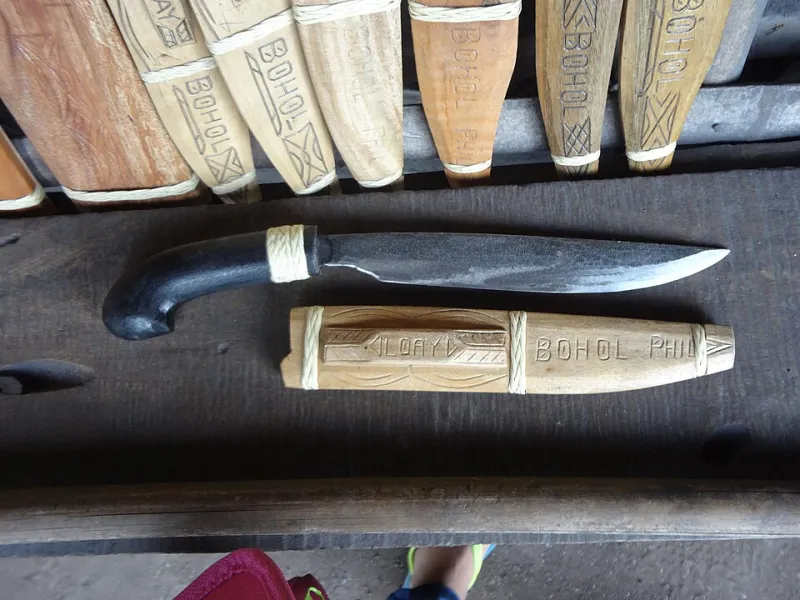
Photo: shankar s. from Dubai, united arab emirates, CC BY 2.0, via Wikimedia Commons
There's a particular kind of disrespect that gets dressed up as practicality. For decades, the knives and blades coming out of Southeast Asia were filed under "utility" by Western buyers and collectors — good enough to chop through sugarcane or prep a market haul, but not quite worthy of the reverence lavished on a Japanese santoku or a Scandinavian puukko. That framing is getting dismantled, blade by blade, by a generation of artisans who know exactly what their craft is worth.
The global craft tool movement — that broad, enthusiastic community of makers, chefs, woodworkers, and collectors who treat handmade tools as objects of serious cultural weight — has been growing fast in the US. Boutique knife shows fill up in Portland. Waiting lists for custom blade makers stretch months out. And increasingly, the makers drawing the most curious eyes aren't coming from the usual European or Japanese lineages. They're coming from the Philippines, Thailand, Indonesia, and beyond.
The Bolo Gets Its Due
The Filipino bolo is one of the most misunderstood tools in the global blade conversation. To most Americans, it reads as a machete — big, agricultural, blunt in purpose. But spend any time with the smiths working out of Batangas province, and that reading falls apart fast.
Batangas has a blade-making tradition that predates Spanish colonization. The region's smiths developed distinct geometries, heat-treating methods, and handle designs that were never really about brute force — they were about balance, about how a tool moves through a task. The bolo's wide, forward-weighted blade isn't crude engineering; it's a deliberate solution to the specific physical demands of the Philippine archipelago's agricultural and culinary landscape.
What's changing now is who's paying attention. A small but growing number of Filipino blade makers have started positioning their work directly at the US craft tool market — selling through Instagram, taking commissions from chefs and outdoor enthusiasts, and showing up at artisan markets where the conversation is about provenance and process, not just price per inch of steel.
They're not dumbing the work down to sell it. They're contextualizing it. And that's a very different move.
Chiang Mai's Quiet Collective
Thailand doesn't always get name-checked when people talk about blade culture, but it probably should. In and around Chiang Mai, a loose network of knifesmith workshops has been operating for generations, producing everything from everyday kitchen tools to elaborately finished pieces that blur the line between functional object and sculptural work.
What makes this scene interesting — especially to anyone paying attention from the US side — is how deliberately some of these makers are engaging with the craft tool community's language without abandoning their own. They're not rebranding their knives as "Japanese-style" to move product. They're leaning into the specific characteristics of Northern Thai metalworking: the particular carbon steel alloys favored locally, the handle materials sourced from regional hardwoods and water buffalo horn, the finishing techniques passed down through family workshops.
There's a collective operating out of the city's outskirts that's been particularly sharp about this. They document their process obsessively — not for the algorithm, but because they understand that in the craft tool world, transparency about method is a form of value creation. When an American woodworker or home cook buys one of their pieces, they're not just getting a knife. They're getting a window into a metalworking tradition that most of the Western world has never thought to look at.
Reclaiming the Narrative on "Utilitarian"
Here's the thing about the word "utilitarian" — it's only ever used to diminish things made by people without institutional power. The same functional elegance that gets called utilitarian when it comes from Southeast Asia gets called "refined minimalism" when it comes from somewhere with better PR.
The blade makers pushing back against this aren't doing it with manifestos. They're doing it with the work itself. A hand-forged bolo with a perfectly fitted carabao bone handle, finished to a mirror polish, speaks for itself in a way that no amount of repositioning copy can manufacture. A Thai kitchen knife with a hand-hammered blade and a handle carved from mango wood doesn't need a heritage brand story — it has an actual heritage.
What these artisans are learning to do, sometimes through painful trial and error with Western platforms and buyers, is control how that story gets told. That means pricing work at rates that reflect the skill involved, not the geographic assumptions of the buyer. It means educating customers about what they're actually holding. And it means building communities of people who understand the difference between a blade made in an afternoon and one that carries a lineage.
Why This Matters Beyond the Knife World
If you're not a blade person, you might be wondering why any of this matters. Here's the bigger picture: the craft tool movement in the US has real cultural and economic weight. When makers from Southeast Asia successfully enter that conversation on their own terms, it shifts something. It expands the canon. It puts Filipino and Thai and Indonesian metalworking knowledge in the same sentence as traditions that have spent decades being celebrated as the gold standard.
That's not a small thing. The narrative around what counts as "fine craft" has always been tangled up with whose work gets taken seriously and whose gets marked down to souvenir price. Every Batangas bolo that lands in a serious collector's hands, every Chiang Mai kitchen knife that earns a spot in a professional chef's rotation, is a small correction to a very long-running imbalance.
The site you're reading is literally named after a knife. We've been thinking about blades from the start. And watching these makers find their footing in a global market that's finally, slowly, starting to pay attention — that's the kind of story we're here for.
The Work Continues
None of this is a solved problem. The craft tool market can be fickle, and the line between genuine appreciation and exoticizing consumption is one that both makers and buyers have to stay honest about. The best outcomes happen when the relationship is built on actual knowledge — when a buyer understands what they're purchasing and a maker retains control over how their work is represented.
But the momentum is real. Southeast Asian bladesmiths are showing up in spaces that used to overlook them entirely, and they're not showing up as curiosities. They're showing up as peers. That shift — quiet, incremental, forged in the same fire as the blades themselves — is worth watching closely.